Showing posts with label Metro 2033. Show all posts
Thursday, November 28, 2013
Notes on Metro: Last Light
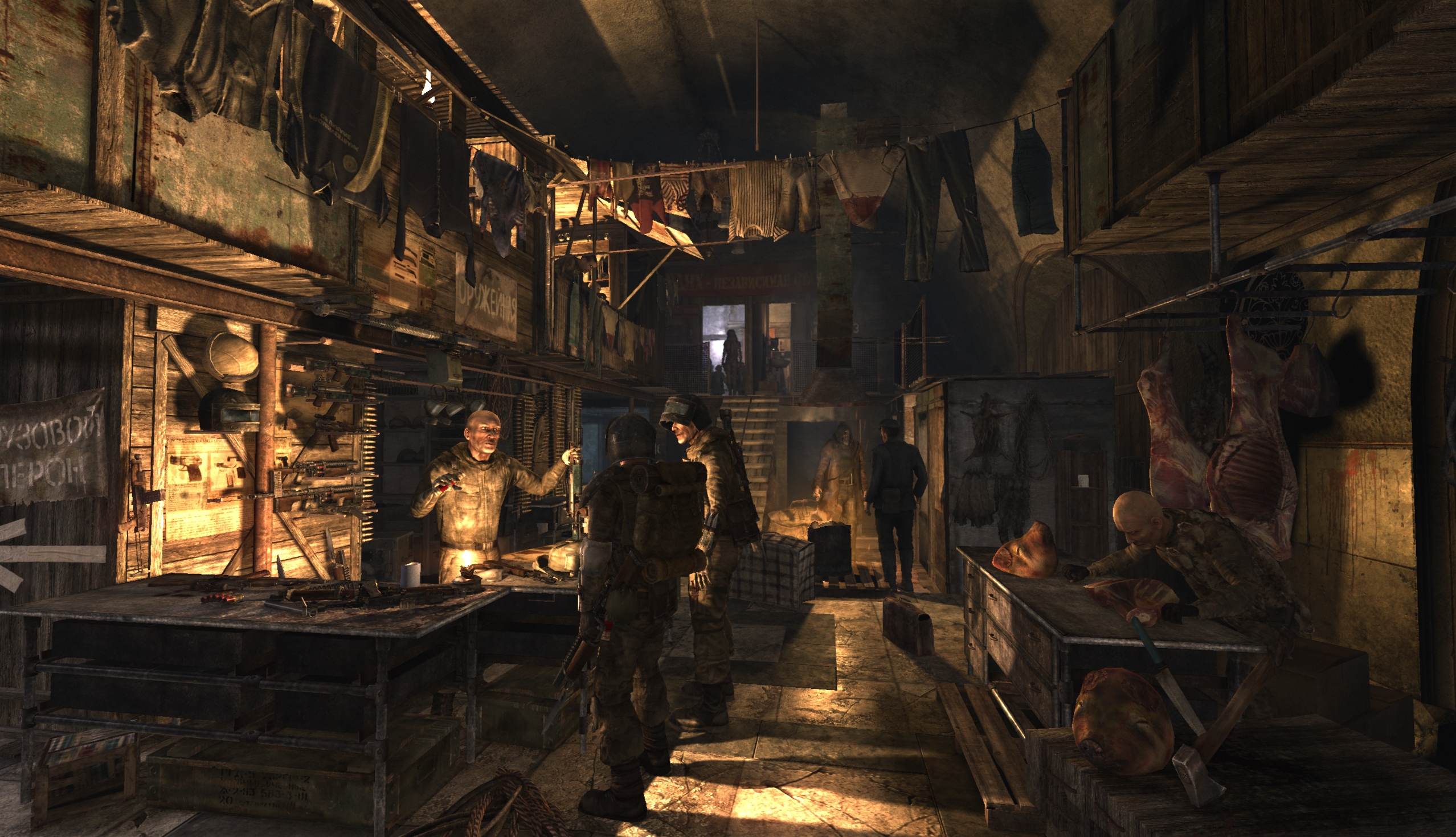
1. I went into Last Light braced for disappointment. Metro 2033 had been one of those games that I loved for its roughness, from its personality that came precisely from not being polished to within an inch of its life. It had this jagged silhouette that if it walked into the room, you knew exactly what game it was. That kind of roughness can only come from a team with a big heart and a small budget. When that kind of game does good, and a larger budget is given to a sequel, that roughness rarely survives. It almost is impossible for it to survive. So I went into Last Light excited for more Metro but ready to accept that more of what made Metro good might be impossible.
I was ultimately surprised, then, to find that Last Light, largely held onto much of what made Metro 2033 feel so good. The oppressiveness, the bleakness, the kind of stand-off-ish design that will just dump you in a place with no clear waypointing or objectives and just let you figure it out. Some parts of the game have been polished up, but only selectively and to the game's benefit. Guns in 2033 felt jangly like you would expect a gun built from scrap to feel, but they lacked a punch. Last Light's guns are punchy enough that skirmishes are enjoyable, while still feeling super messy. It feels like they tried to polish the jags into being more pronounced, not just polish them away to a curved nothing. So that is nice. It still lacks some of what made Metro 2033 special, but it is about as good as a sequel to a rough game could hope to be.
2. Which is not to call the game perfect. Last Light still seemed to lose focus on what made 2033 so special. In particular, the sense of life in the metro the first game evoked. There was this real sense of being a commuter, fittingly enough, of just passing through this towns that were other people's entire lives. The people in the bunks on old carriages, or the way a station is sectioned off into small houses. It was always amazing to stop and look at these places, but always fleetingly as you were always on your way to meet someone. Last Light still has a bit of that, and when it does, it is terrific. A moment near the start of the game where you are dashing through a nazi station under fire and you get this faint glimpse of everyday life as you dash past. The theatre station and the flooded station of Venice are particularly strong highlights of just 'life on the metro'. As is the refugee train.
But, for the most part, with the story focusing on WAR and militaries and all that, we don't get the same diversity of lives and lifestyles 2033 gave us. We have army bases and prisons and dead towns and army dudes and more army dudes. It feels less like a place and more like a serious of videogame levels at times. It felt more like a videogame story than an adaption of a novel this time, essentially.
3. Related to that is the sheer number of men in the game (or the lack of women, more accurately). It's just a bunch of gruff dudes and the occasional woman (they all look the same) sobbing in the background. 2033 was largely men doing things, to be sure, but the places felt alive with children and grannies and dogs and all kinds of people. Now we just get soldiers. The two women who speak in the game are a prostitute (whose nipples you can see while she offers you sex) and a sniper lady (whose nipples you can see while she offers you sex. Also she has your son, of course). How to sap any atmosphere from your world: homogenise the people you populate it with.
4. I really enjoy the stealth of Last Light. It's that kind of stealth that goes really good until you screw up, and then you pull out your shotgun and improvise. That kind of stealth works in very few games, because usually there is some fictional context that makes that kind of stealth feel very wrong, even when it is mechanically possible. Some games get it right. Splinter Cell: Conviction always presented contexts where the enemy knew Fisher was around somewhere, so if things devolved into a gunfight, it felt natural. The same goes for Last Light. I never felt like I needed to reload the game when I was seen, just change my tactics.
5. That grittiness of 2033 remains. The constantly pressure of needing to recharge your batteries, needing to replace your oxygen mask filters, needing to pump your airgun. All these little things always taking up your attention just to stay alive. It's incredible effective here as it was in 2033. It is weakened, though, by a timer giving you the exact number of seconds of filter life you have left. It is strengthened, though, by the need to press a button to wipe water or blood off your oxygen mask to see clearly.
6. I really like the subtly of both 2033's and now Last Light's approach to the supernatural. Not so much with the 'dark ones' who are just some generic alien monster things, but with the shadow-ghosts that disappear if you shine a light directly at them, or hallucinations of a thousand arms stretching out to get you. They never really try to explain it; they just do it and it's kind of cool.
7. Last Light's ending is terrible. There are two endings, to be sure (like 2033, Last Light has this very subtle series of choices through the game that never tell the player they are about to make a choice, and I really love that), but the ending I got was terrible, and I don't doubt the other one was just as bad. The game has this slow steady build up of 'war is coming' and needing to find answers and needing to make peace and all of that. Then, while there are still all these loose narrative threads unresolved, the 'war' happens, and it is just a terrible stand-your-ground turret section, and then some dude tells you, by the way, I rigged the place to blow, and you blow the place up, making the Ultimate Sacrifice. Then you find out Sniper Women Who You Had Sex With was telling this whole story to your son because of course if you have sex once you are going to have a child.
It is actually the most terrible ending I've experienced since Far Cry 3 (Far Cry 3's endings (both of them) made me laugh at my television they were both so terrible). It is the most generic, bullshit, 'oh I guess we should wrap things up now' kind of ending. It's the kind of ending of the fantasy stories I wrote in my teenage years with absolutely zero planning about how they would end. One day I'd just get bored of all these action sequences I was ripping right out of Dragon Ball Z and stick an ending on them. That is how Last Light ends and it is appallingly bad, to the extent that it damaged my overall feelings about the game.
Wednesday, January 5, 2011
Some Thoughts on 2010: Part Four
And with five more games, so ends my 2010 retrospective. You can check out the games I have already talked about in part one here, part two here, and part three here.
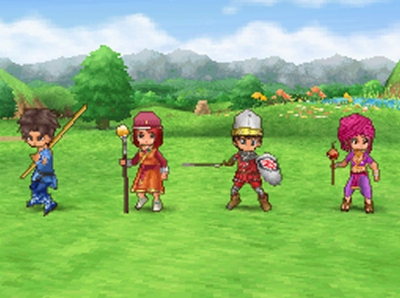
Dragon Quest IX
This was my first ever Dragon Quest title, and I had high hopes. I've heard much about the series generally and even more about this game specifically. Certainly, it is the first JRPG I have really enjoyed since Final Fantasy IX, and is also exactly the kind of title I have wanted for my DS for years--namely, a game that is as enjoyable to play for five minutes as it is for fifty.
While the Final Fantasy series seems intent on distancing itself from its roots as much as possible (I have no interest in Final Fantasy XIII whatsoever), Dragon Quest IX is a delightful re-imagining of SNES-era JRPGs with modern sensibilities. The dialogue is alarmingly well-written and full of self-aware humour and bad (i.e. awesome) puns. It takes itself serious enough and constantly throws interesting dilemmas at the player while also constantly lampooning JRPG tropes and cliches.
The story is passable but forgettable, and exists only to prop up the question, yet it does so aptly. Battles are quick and enjoyable and, thankfully, allows you to quickly change between AI settings or switch to full manual control. I hate turn-based games that don't let me control all my people. Dragon Quest IX's AI settings are usually okay, but it is good to be able to switch them off mid boss battle when need be.
Character customisation adds a lot, too. Being able to see every single piece of armour and weaponry on each of your characters adds just enough motivation to buy that new bandanna. I surprised myself by actually considering less-strong shoes for one character just because they matched the rest of her outfit.
I've only just recently tried out the much talked about multiplayer. It is enjoyable enough, though being in another player's world just feels... fruitless. However, pretending you are an AI companion for that player is kind of fun.
I only recall reading one Dragon Quest IX related article this year, and that was a spotlighted blog at Destructoid about how the game deals with the theme of faith.
WarioWare D.I.Y
Contender for best game manual of the year. In the same year that Ubisoft said it would stop supplying printed manuals with games (it was Ubisoft, right?), WarioWare D.I.Y came with a beautiful, thick little book with fold out covers that I sat down to read cover to cover in the vain hope that if I actually read it, game designers would create more manuals like this.
I am not much of a creator of content in games. In LittleBigPlanet, ModNation Racers, Minecraft, I spend very little time actually creating and much more time marveling at the things others create. Yet, in WarioWare D.I.Y, I found it incredibly simple to create fun mini-games of startling variety that just fit into the games existing style without much polish. It takes effort to make a working LittleBigPlanet level to look 'good', but not so in WarioWare D.I.Y.
Similar to the stunning manuals, if you are patient enough to sit through them, the tutorials are practically beginners lessons at object-orientated programming. Even a kid could sit through these and at the end understand the difference between a FOR... DO loop and a WHILE... DO loop. If you have a kid you think would enjoy programming, this is a pretty decent place to start.
Yet I feel it went under the radar a bit. Perhaps if it allowed more complex controls than just tapping, and if it came with more prepackaged games it would have fared better. That said, it has the easiest to use online service of any DS game I've played... but that isn't saying much. If only the DS had a better integrated friend system to help spread games more, I would probably have spent many more hours on this game. At present, it is on the top of my "must return to soon" pile.
BIT.TRIP BEAT
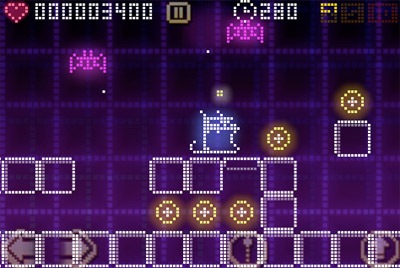
I first grabbed this game on my iphone, but didn't fully appreciate it until I grabbed it for my macbook in the recent Steam sale. BIT.TRIP BEAT (I am under the impression that the capitals are required) is a torturous, indie reinterpretation of ball-and-board games such as Breakout and Pong. It is an entertaining experience, but it is hard to call the game 'fun'. BIT.TRIP BEAT hurts. It makes you dizzy, it makes you motion-sick, it makes your eyes feel like they are bleeding. The visuals are psychedelic and go out of their way to make things difficult for you. Your targets are logic-defying and mindboggling, and the difficulty curve is steeper than the walls of your house.
Yet, I keep returning to it. This game is certainly not for everyone. Hell, this game might not be for anyone. But despite the fact I can't defeat the second level, I still want to keep playing it. Though, I no longer try the iphone version. I almost vomited on the bus one too many times.
Metro 2033
The gunplay in Metro 2033 is nothing special. The mutant enemies are arbitrary and forgettable at best and rage-inducing at worst. Towards the end these green blob... things made me rage quite more than once and nearly prevented me from finishing the game.
But the sense of atmosphere the game invokes is unprecedented. Walking around the train stations of Moscow's post-apocalyptic Metro, the world and its people felt real. Their day-to-day problems felt real, and I felt like a part of them. A lot of the worldbuilding is probably owing to the novel, but it pays off excellently. When the gameplay falls through, the fiction keeps you going.
The atmosphere is not just in the towns, however. The sense of cold and the sense of that bare, stubborn struggle of survival are so visceral. From saving individual bullets to wheezing through a spoiled oxygen mask filter instead of wasting a new one, it just felt so... real.
Playing a game in Russian certainly added something, also. It just felt right. I think it is a silly and demeaning analogy to say it felt like playing gaming's version of watching a world movie, but that is what it made me want. Metro 2033 made me hungry for more international games than the typical English and Japanese ones I have access to in this country.
I can't recall reading much about Metro 2033, but I'm sure things were written. Please leave me links to any pieces you remember reading.
iPhone Games
My initial list for these posts had about twenty more games in it, but instead I thought I could put them all under this heading. I stress, though, that that is not because all these games together are only as important to me as one other 'real' game. It is simply because I cannot afford the time to write about twenty more games.
I have purchased (or downloaded for free) fifty-two iPhone games since purchasing my iPhone in February 2010. In that time I have played many games that I have thoroughly enjoyed and still often return to at the bus stop, on my lunch break, or just lying in bed. I hold these games largely responsible for the little playtime my DS has received.
Top games include Angry Birds, or course, but also Adam Saltsman's Canabalt and Gravity Hook work perfectly with the touch controls. Solipskier is another great title, requiring you to just keep your finger on the screen. Osmos works beautifully with the touch controls (far better than its PC counterpart), and Spider uses the iPhone's unique abilities superbly to create a very interesting and fresh platformer that also tells a spatial narrative. Meanwhile Tractor Beam is an interesting take on Asteroid which uses physics in some very interesting ways.
All these games are great games because they would not (or do not) work on other platforms. Too many big publishers try to release ports of big console releases on iPhone for $10 that play horribly, yet the indies and the smaller companies have understood that there still exists so much potential in simplistic, minimalist controls, and these are the games that have made the iPhone such a great gaming platform.
That said my most-played and most enjoyed iPhone game was, surprisingly, one using on-screen controls. Pix'n Love Rush is a great little platformer that I have trouble explaining why I enjoy. Each level is mere seconds long, and you complete a five minute game by perfecting as many of these levels as possible, racking up your multiplier as you go. The visuals are delightfully retro (of course) and there are many nods to previous generations of games, as well as a great chiptune soundtrack. Perhaps it is the retro indie platformer obsessive in me, perhaps it is my love of score-chasing, but Pix'n Love Rush just struck a nerve in me and I found it very hard to stop playing. I even wrote a little reader review for Kotaku about it!
And those are the games I played in 2010. How about you? Any particularly interesting ones that tickled your brain that I didn't cover? Any articles I should have linked to but didn't? Let me know! And thanks for actually reading all these. It's been a pleasure to relive all these games, and now I am tempted to start new games on all of them!
Dragon Quest IX
This was my first ever Dragon Quest title, and I had high hopes. I've heard much about the series generally and even more about this game specifically. Certainly, it is the first JRPG I have really enjoyed since Final Fantasy IX, and is also exactly the kind of title I have wanted for my DS for years--namely, a game that is as enjoyable to play for five minutes as it is for fifty.
While the Final Fantasy series seems intent on distancing itself from its roots as much as possible (I have no interest in Final Fantasy XIII whatsoever), Dragon Quest IX is a delightful re-imagining of SNES-era JRPGs with modern sensibilities. The dialogue is alarmingly well-written and full of self-aware humour and bad (i.e. awesome) puns. It takes itself serious enough and constantly throws interesting dilemmas at the player while also constantly lampooning JRPG tropes and cliches.
The story is passable but forgettable, and exists only to prop up the question, yet it does so aptly. Battles are quick and enjoyable and, thankfully, allows you to quickly change between AI settings or switch to full manual control. I hate turn-based games that don't let me control all my people. Dragon Quest IX's AI settings are usually okay, but it is good to be able to switch them off mid boss battle when need be.
Character customisation adds a lot, too. Being able to see every single piece of armour and weaponry on each of your characters adds just enough motivation to buy that new bandanna. I surprised myself by actually considering less-strong shoes for one character just because they matched the rest of her outfit.
I've only just recently tried out the much talked about multiplayer. It is enjoyable enough, though being in another player's world just feels... fruitless. However, pretending you are an AI companion for that player is kind of fun.
I only recall reading one Dragon Quest IX related article this year, and that was a spotlighted blog at Destructoid about how the game deals with the theme of faith.
WarioWare D.I.Y
Contender for best game manual of the year. In the same year that Ubisoft said it would stop supplying printed manuals with games (it was Ubisoft, right?), WarioWare D.I.Y came with a beautiful, thick little book with fold out covers that I sat down to read cover to cover in the vain hope that if I actually read it, game designers would create more manuals like this.
I am not much of a creator of content in games. In LittleBigPlanet, ModNation Racers, Minecraft, I spend very little time actually creating and much more time marveling at the things others create. Yet, in WarioWare D.I.Y, I found it incredibly simple to create fun mini-games of startling variety that just fit into the games existing style without much polish. It takes effort to make a working LittleBigPlanet level to look 'good', but not so in WarioWare D.I.Y.
Similar to the stunning manuals, if you are patient enough to sit through them, the tutorials are practically beginners lessons at object-orientated programming. Even a kid could sit through these and at the end understand the difference between a FOR... DO loop and a WHILE... DO loop. If you have a kid you think would enjoy programming, this is a pretty decent place to start.
Yet I feel it went under the radar a bit. Perhaps if it allowed more complex controls than just tapping, and if it came with more prepackaged games it would have fared better. That said, it has the easiest to use online service of any DS game I've played... but that isn't saying much. If only the DS had a better integrated friend system to help spread games more, I would probably have spent many more hours on this game. At present, it is on the top of my "must return to soon" pile.
BIT.TRIP BEAT
I first grabbed this game on my iphone, but didn't fully appreciate it until I grabbed it for my macbook in the recent Steam sale. BIT.TRIP BEAT (I am under the impression that the capitals are required) is a torturous, indie reinterpretation of ball-and-board games such as Breakout and Pong. It is an entertaining experience, but it is hard to call the game 'fun'. BIT.TRIP BEAT hurts. It makes you dizzy, it makes you motion-sick, it makes your eyes feel like they are bleeding. The visuals are psychedelic and go out of their way to make things difficult for you. Your targets are logic-defying and mindboggling, and the difficulty curve is steeper than the walls of your house.
Yet, I keep returning to it. This game is certainly not for everyone. Hell, this game might not be for anyone. But despite the fact I can't defeat the second level, I still want to keep playing it. Though, I no longer try the iphone version. I almost vomited on the bus one too many times.
Metro 2033
The gunplay in Metro 2033 is nothing special. The mutant enemies are arbitrary and forgettable at best and rage-inducing at worst. Towards the end these green blob... things made me rage quite more than once and nearly prevented me from finishing the game.
But the sense of atmosphere the game invokes is unprecedented. Walking around the train stations of Moscow's post-apocalyptic Metro, the world and its people felt real. Their day-to-day problems felt real, and I felt like a part of them. A lot of the worldbuilding is probably owing to the novel, but it pays off excellently. When the gameplay falls through, the fiction keeps you going.
The atmosphere is not just in the towns, however. The sense of cold and the sense of that bare, stubborn struggle of survival are so visceral. From saving individual bullets to wheezing through a spoiled oxygen mask filter instead of wasting a new one, it just felt so... real.
Playing a game in Russian certainly added something, also. It just felt right. I think it is a silly and demeaning analogy to say it felt like playing gaming's version of watching a world movie, but that is what it made me want. Metro 2033 made me hungry for more international games than the typical English and Japanese ones I have access to in this country.
I can't recall reading much about Metro 2033, but I'm sure things were written. Please leave me links to any pieces you remember reading.
iPhone Games
My initial list for these posts had about twenty more games in it, but instead I thought I could put them all under this heading. I stress, though, that that is not because all these games together are only as important to me as one other 'real' game. It is simply because I cannot afford the time to write about twenty more games.
I have purchased (or downloaded for free) fifty-two iPhone games since purchasing my iPhone in February 2010. In that time I have played many games that I have thoroughly enjoyed and still often return to at the bus stop, on my lunch break, or just lying in bed. I hold these games largely responsible for the little playtime my DS has received.
Top games include Angry Birds, or course, but also Adam Saltsman's Canabalt and Gravity Hook work perfectly with the touch controls. Solipskier is another great title, requiring you to just keep your finger on the screen. Osmos works beautifully with the touch controls (far better than its PC counterpart), and Spider uses the iPhone's unique abilities superbly to create a very interesting and fresh platformer that also tells a spatial narrative. Meanwhile Tractor Beam is an interesting take on Asteroid which uses physics in some very interesting ways.
All these games are great games because they would not (or do not) work on other platforms. Too many big publishers try to release ports of big console releases on iPhone for $10 that play horribly, yet the indies and the smaller companies have understood that there still exists so much potential in simplistic, minimalist controls, and these are the games that have made the iPhone such a great gaming platform.
That said my most-played and most enjoyed iPhone game was, surprisingly, one using on-screen controls. Pix'n Love Rush is a great little platformer that I have trouble explaining why I enjoy. Each level is mere seconds long, and you complete a five minute game by perfecting as many of these levels as possible, racking up your multiplier as you go. The visuals are delightfully retro (of course) and there are many nods to previous generations of games, as well as a great chiptune soundtrack. Perhaps it is the retro indie platformer obsessive in me, perhaps it is my love of score-chasing, but Pix'n Love Rush just struck a nerve in me and I found it very hard to stop playing. I even wrote a little reader review for Kotaku about it!
And those are the games I played in 2010. How about you? Any particularly interesting ones that tickled your brain that I didn't cover? Any articles I should have linked to but didn't? Let me know! And thanks for actually reading all these. It's been a pleasure to relive all these games, and now I am tempted to start new games on all of them!
Labels:
bit.trip beat,
Dragon Quest IX,
Games of 2010,
iphone,
Metro 2033,
warioware diy
Monday, June 14, 2010
Paying For My Sins
“To Artyom!”
Artyom sculls the vodka shot. We are sitting in the bar at Riga Station, drinking to our survival. Artyom and I just experienced our first adventure beyond the safety of Exhibition Station. We lost the trader, but the remaining three of us pulled each other to safety. Boris is talking about something; I am not really listening. I look around the bar, admiring Metro 2033’s beautiful architecture. The nervous horror that caused my hands to tremble and my aim to go wide is already fading in the warm glow of the gaslights.
A flash of red catches my eye. A pale girl sitting at the back of the bar smiles and waves at me. Embarrassed, I glance away. Boris is making another toast in my honour, and I belatedly pick up my glass to join in. I edge my eyes around to look at the girl again, her red hair and black leather so out of place among the brown and khaki, so unlike the Exhibition girls. She stands and struts out of the bar, keeping her eyes locked on me as she walks slowly, teasingly, across my field-of-view.
Finally, the vodka is drunk, and I leave the bar—sad to be farewelling my friends but eager to continue to Polis. As I leave, I can hear Boris retelling our tale and raising another toast in my name.
Before I can find Riga’s shops, a boy tells me a man wants to speak to me. I give him a bullet and he leads me to Bourbon. Bourbon wants to pay me to help him get to the next station. I can hardly believe my luck. My first victory against the monsters behind me, a track-smart cowboy willing to assist me, a pocket full of military-grade bullets, and the promise of a pre-war AK-47 on arrival. Everything was looking up. Part of me knew I was letting the romance of adventure get the better of me, and I was forgetting the gravity of my mission, but I didn’t care.
With my newfound wealth, I head back to find Riga’s shops to load up on new weapons and equipment before setting forth with Bourbon. I dream of a weapon with a scope of some sort. Perhaps a few extra medkits and oxygen mask filters as well. If there was a button on my controller to put a skip into my step, I would be pressing it.
“Hey, you.”
I stop and turn. The red-hair, black-leather girl is looking at me, one hand on her hip.
“I’ve got a surprise for you. Back in my room.”
I walk up to her, pathetically nervous. The ‘$’ symbol appears, telling me I am able to enact a money transfer. What she wants is pretty explicit.
Throughout my gaming years, I have done horrible things—despicable things—to, and to the expense of, nonplayable characters. I have, on occasion, caused more death among the scientists of Black Mesa than the residence cascade ever did; I have chased down peds in Carmageddon, letting them hop futilely and frantically on their remaining leg before finishing them off; I have blown up Megaton for money. I have thrown grenades in strip clubs; I have nuked entire cities; I have removed ladders from my Sims’ swimming pools and watched them flounder. And not just violent things. I lie, cheat, slander, and abuse nonplayable characters for my own benefit and enjoyment. Not all the time, mind you—more often than not I play a morally “positive” character—but I do it.
All these things (and others I am too ashamed now to recall) I did because I was invincible. What I do in the game-world has no repercussions on me in the real world. I am a god. These people are not even real. What is their suffering to me if I am able to progress the game? So what if I get some kind of sick pleasure out of their agonies?
This girl in Riga Station (Nikki, I would later find out her name is) offering herself to me for money. This is something I have never been compelled to do in a game as virtual sex scenes do not particularly entice me. Never mind the many worrying connotations of a society that thinks it is okay to present a game-world where A) paying women for sex is fine, but paying men for sex is unheard of; and B) the only meaningful role played by a female is as a prostitute.
This time, though, I am tempted. Artyom is eighteen, just survived a near-death experience, is slightly intoxicated, and has plenty of bullets to spend. Besides, Nikki is the most attractive person I have seen on the Metro thus far. Artyom could more than likely be heading to his death; doesn’t he deserve some fun first? But this is unfair, to put all the blame on Artyom. I press the button and pay her the bullets. She smiles again. Looking back, I think it is the smile that bought me.
“Follow me.”
In her room, she sits me on her bed and turns her back to me. She starts fumbling with her top.
“Now, close your eyes.”
This is when I realise something is wrong. I want to stop Artyom from doing this. As if the fool would be stupid enough to close his eyes! As if I would be stupid enough to lead him into this room in the first place!
Artyom opens his eyes after a few seconds. A giant of a man is looming over him. In that man’s face, in Nikki’s victorious smile behind his shoulder, I do not see con artists. Rather, I see ever nonplayable character I have mistreated over the years for my own benefit or enjoyment. “This is what happens when you fuck with us,” they seem to be saying. Artyom is punched out cold; I am slapped across the face.
When I finally come to, the man, Nikki, and all my bullets are gone. A bum sticks his head in the room and laughs at me, not believing anyone could be so stupid to fall for Nikki’s trick. Everyone knows to stay away from Nikki, supposedly.
The self-loathing is heavy on my shoulders as I sulk back to Bourbon. Part of me wants to scrounge Riga Station for bullets, to make up for what I lost, but I cannot bare the idea of coming face to face with more nonplayable characters. As it is, I look down at the ground as I pass the few on the way to Bourbon, unable to make eye contact.
I am carrying the same crappy weapons I left Exhibition with. I have no scoped rifle, no extra ammunition, no money. I’m embarrassed, ashamed, and feeling incredibly stupid. Metro 2033 tempted me to treat nonplayable characters the same way I always do, like shit, then taught me a harsh lesson for doing so.
Bourbon looks up at me. I swear he is about to ask me what I spent all his bullets on. Fortunately, he does not.
“You ready?” is all he says.
I look at my meagre supplies: my sparse filters, my two medkits, and few clips of bullets. I nod.
“Good. Let’s go.”
Thursday, June 3, 2010
Game Diary 03: 03 June 2010
[Game Diary is a semi-regular column reflecting on the games I am currently playing, articles I have recently read, and writings I am currently working on.]
It has been quite some time since my last Game Diary entry. I can put this down to one major excuse: Red Dead Redemption. Though, ModNation Racers as well as cheap copies of Mass Effect 2 and Final Fantasy XIII have not helped matters either. I now find myself in the unenviable position of having three hundred-plus hour games to complete along with plenty of articles and essays to write, and great articles to read.
Games I Played
Red Dead Redemption. Where to begin? What to say about this game that you have not already heard? While I know many of you will disagree with me, I feel Rockstar are doing some of the most exciting work out there in terms of incorporating mature, intelligent stories into videogames. I know Red Dead Redemption is created by a different team than Grand Theft Auto IV, but Dan Houser is still a major writer (if the opening credits are to be believed), and it certainly shows. The entire game drips with intelligent satire and knowing nods to the Western genre--staying true to the aesthetics and iconography while also critiqueing it with a contemporary eye. Rockstar's biting satire remains but the potty humour and mention of titties has (thankfully) largely been left in Liberty City.
The map is sprawling and vast, yet full of things to do. I rarely feel the urge to quick travel; this is the kind of world that begs you to take your time exploring. Shooting is more fun than in Grand Theft Auto IV, and actually quite challenging once you turn off auto-aim. My only major criticism is that every mission is basically the same predictable structure (ride somewhere, shoot stuff, ride back), but there are a few delightful surprises. But even when the missions are all the same, the scriptwriting and presented fiction are all so tight that I hardly mind galloping into Armadillo one more time.
ModNation Racers. I won't repeat everything I have already said in my post on this game, suffice to say that it is an excellent, enjoyable racer hidden behind a horrible mish-mash of laggy, un-navigable menus.
Mass Effect 2. I made the mistake of walking past EB Games the other week just as their stocktake sale was commencing. Before I knew it, I had picked up half-price copies of Mass Effect 2 and Final Fantasy XIII--both games I intended to play "one day" when they didn't cost $100. I guess it is that day!
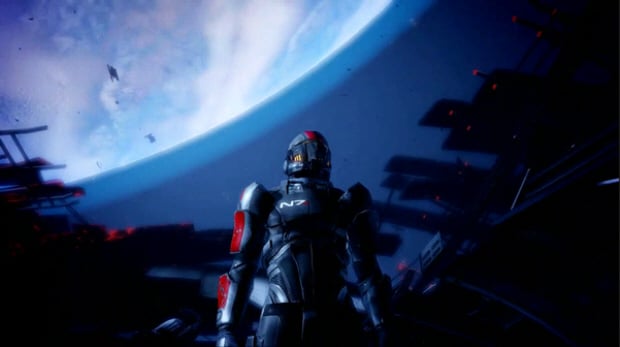
I have something of an allergic reaction to BioWare games, I admit. I don't know what it is. Every since Knights of the Old Republic, I have started a game with high hopes after hearing nothing but positive things, and then I just get... over it, I suppose, quite quickly. Perhaps not 'bored' so much as 'intimidated'. Perhaps BioWare's stories, which I really do have some control, scare the crap out of me and, afraid of the responsibility, I run back to my more predictable, linear games. Well whatever it is, I am glad to say that Mass Effect 1 was the exception to my BioWare fallacy, and Mass Effect 2 seems likely to continue the tradition. i am glad that they have stripped back (or hidden away) the role-playing elements; though, it would have been nice if they had fine tuned the combat a bit more to make up for the lack of number-crunching depth. But it is early days yet, perhaps when I stop relying on my pistol and single tech skill it will get a bit more involving. That said, the graphics are still slick, the voice acting is still incredible, and the world(s) are still beautiful. I'm looking forward to putting a heap of hours into this one when I get the chance.
Final Fantasy XIII. Okay. I admit I have not actually played this yet, but my girlfriend has, and I have been sitting nearby for the five-ish hours she has played so far. So far it seems to be exactly as every review and article I read about it says: one incredibly slow grind that drips abilities and options to the player at the slowest pace imaginable, as though the game is afraid the player could not possibly handle two 'new' concepts at once (as if anything in Final Fantasy is new anymore). Though now, after five hours, the combat is looking a lot more compelling and I am more tempted to start up a game myself.
The scriptwriting and voice acting, while still not amazing, seems a great deal better than any previous Final Fantasy. I particularly like all the tensions and strains between the various characters. And all the nods to Final Fantasy VII are enjoyable and appreciated.
Some Things That I Read.
"I'm Your Huckleberry" at The Brainy Gamer. An entertaining and well-written little piece telling the tale of one player's perpetual fight with an anti-Semite shopkeeper in Red Dead Redemption.
"Groping The Map: Pauper's Drop" at Groping The Elephant. Justin Keverne has set himself a huge challenge of writing these massive, multi-part articles that thoroughly walk through specific game levels and explore how those levels use space and their mise-en-scene to guide the player. His first installment, on the Bioshock 2 level Pauper's Drop is nearly all up (five out of seven sections!) and certainly worth the read. Justin has a great critical eye for the ways the level manipulates and directs the player, and how the player understands the world through the level. As someone who has a great interest in videogame level design but absolutely no formal education in the matter, I'm finding these posts as educational as they are interesting.
"Video Games, I've Let You Down" at Kotaku. Leigh Alexander's piece about the difficulty of trying to explain why videogames can be great to non-gamers strikes pretty close to home. A good read.
Practically all of EDGE E215. Alas, my subscription to EDGE ran out at E214, and then E215 has a whole bunch of great articles. So I went and bought myself a copy from a shop, once they finally got it imported, and then went home and renewed my subscription. The retrospective on Halo is especially interesting, as it is a far greater version of a piece I have wanted to write for some time. Halo is a spectacular game, fanboy-love aside, and I think this piece does a good job at justifying why. The Time Extend on Sim City 4 made me pick up a cheap copy (I haven't played a Sim game since SimCity on SNES), and the LittleBigPlanet2 hype article was, well, successful. Oh, not to mention the extensive interview with Shigeru Miyamoto.
Some Things That I Wrote.
Most exciting for me since I last posted a Game Diary: Kotaku Australia published my reader review of Metro 2033. Apart from that, I have written a rambling review of why I hate to love ModNation Racers, an article to pay tribute to the heroes of the Moscow Metro that risked their lives for me, as well as a reluctant, hesitant piece defending the cut-scene as a valid mechanic of interactive storytelling. The same old university writing is continuing at the same old pace.
And that is about it.
Monday, May 24, 2010
Heroes of the Metro
Nothing brings people together, nor, conversely, divides ideologies like a tragedy, and what tragedy could be greater than the nuclear obliteration of our entire world? Metro 2033’s survivors exist in such a world—a world of close-knit communities and conflicting ideals. Perhaps it is the socialist roots, but while North American’s apocalypse survivor seems intent on shooting their neighbour in the back for the sake of their own doomed survival in fictions such as Fallout 3 and (to my understanding) The Road, Russia’s survivors are hell-bent on rebuilding society and returning to the surface. Sure, humans still fight humans, but over ideologies and principles, not a handful of bottlecaps. In this post-apocalypse, people are willing to help others, to risk their lives, for more than mere payment. Metro 2033 is a world of heroes.
Artyom, the playable character, is but one of these heroes. I do not mean ‘hero’ in the simple way we often use the word to mean ‘main character.’ Niko Bellic is not a hero—he just wants revenge; the mercenaries of Borderlands and Far Cry 2 are not heroes—they are in it for the treasure. Bioshock’s playable character is doing what he is ordered to do, and Master Chief is doing what he has been constructed to do. But how many playable characters are truly heroes? How many playable characters aren’t extraordinary beings but simple, ordinary people doing extraordinary things for the sake of someone else?
I cannot think of many, but Artyom is certainly one of the few. He is no biological super soldier; he is not a brainwashed killing machine; he is merely a young man, no different from every other young man on Exhibit Station. No different, except that he does not think twice about disobeying his stepfather and risking his own life in a seemingly suicidal trek across the Metro to save his home and the people he loves. He does not do this for fame or glory; everyone surely assumes he is dead before his journey is anywhere near complete. The thought that no one even knows he is out here is gut-wrenching, but that is what a hero must deal with. It makes the going harder, but as every tunnel, every station, every mad dash across the toxic surface takes Artyom further from home, I remember the faces of those back at Exhibition and push on.
But Artyom is not the exception—the Metro survives on the blood of heroes. Artyom would be dead and Exhibition lost many times over if not for the numerous men that help him on his journey—men who have never been to Exhibition but risk their lives for Artyom anyway. Sure, the threat to Exhibition Station will eventually threaten the entire Metro, but for now, these men are risking their lives solely for the people I care about. ‘Love’ is a word I have never before considered using for a non-payable character, but I love these men that risked their lives for my story. From the old man on the caravan to Riga Station that holds back the flamethrowers until he can pull Artyom behind the barricade, to Bourbon’s(sometimes unfortunate) connections, to the poor communist whose name I never learnt and was in the company of for mere seconds. Each of these men cared for me, in their own way, and I was saddened when we had to part ways.
Most of all, though, Artyom and I would have been doomed without Miller and his Rangers. When everything seemed helpless, they came with us on our suicidal mission to D6. Some died, inevitably, and Artyom and I mourned every life sacraficed for our home. We could never repay the debt these brave men earned, but they always knew this—they weren’t doing it for fame and glory, and that is what made them heroes.
Despite its bleak post-apocalyptic setting, its bandits, its civil wars, its mutant monsters, Metro 2033 felt warmer and more optimistic than many games I have recently played. While elements of humanity still seem eager to slaughter each other over ideologies, there are still men (and women, I don’t doubt) willing to give up their own lives for someone they have never met. These heroes of the Metro are some of the finest gentlemen I have ever had the privilege of knowing. I think the future is going to be just fine.
Artyom, the playable character, is but one of these heroes. I do not mean ‘hero’ in the simple way we often use the word to mean ‘main character.’ Niko Bellic is not a hero—he just wants revenge; the mercenaries of Borderlands and Far Cry 2 are not heroes—they are in it for the treasure. Bioshock’s playable character is doing what he is ordered to do, and Master Chief is doing what he has been constructed to do. But how many playable characters are truly heroes? How many playable characters aren’t extraordinary beings but simple, ordinary people doing extraordinary things for the sake of someone else?
I cannot think of many, but Artyom is certainly one of the few. He is no biological super soldier; he is not a brainwashed killing machine; he is merely a young man, no different from every other young man on Exhibit Station. No different, except that he does not think twice about disobeying his stepfather and risking his own life in a seemingly suicidal trek across the Metro to save his home and the people he loves. He does not do this for fame or glory; everyone surely assumes he is dead before his journey is anywhere near complete. The thought that no one even knows he is out here is gut-wrenching, but that is what a hero must deal with. It makes the going harder, but as every tunnel, every station, every mad dash across the toxic surface takes Artyom further from home, I remember the faces of those back at Exhibition and push on.
But Artyom is not the exception—the Metro survives on the blood of heroes. Artyom would be dead and Exhibition lost many times over if not for the numerous men that help him on his journey—men who have never been to Exhibition but risk their lives for Artyom anyway. Sure, the threat to Exhibition Station will eventually threaten the entire Metro, but for now, these men are risking their lives solely for the people I care about. ‘Love’ is a word I have never before considered using for a non-payable character, but I love these men that risked their lives for my story. From the old man on the caravan to Riga Station that holds back the flamethrowers until he can pull Artyom behind the barricade, to Bourbon’s(sometimes unfortunate) connections, to the poor communist whose name I never learnt and was in the company of for mere seconds. Each of these men cared for me, in their own way, and I was saddened when we had to part ways.
Most of all, though, Artyom and I would have been doomed without Miller and his Rangers. When everything seemed helpless, they came with us on our suicidal mission to D6. Some died, inevitably, and Artyom and I mourned every life sacraficed for our home. We could never repay the debt these brave men earned, but they always knew this—they weren’t doing it for fame and glory, and that is what made them heroes.
Despite its bleak post-apocalyptic setting, its bandits, its civil wars, its mutant monsters, Metro 2033 felt warmer and more optimistic than many games I have recently played. While elements of humanity still seem eager to slaughter each other over ideologies, there are still men (and women, I don’t doubt) willing to give up their own lives for someone they have never met. These heroes of the Metro are some of the finest gentlemen I have ever had the privilege of knowing. I think the future is going to be just fine.
Metro 2033 on Kotaku Australia
Kotaku Australia saw fit to publish my reader review of Metro 2033 that I submitted. Cool!
I am aware that I have not posted a real article here for over a week now. Between a large university paper (which I will probably post here at the end of the semester if I cannot get it published in a journal or something), work, and Red Dead Redemption, I have been a tad busy. I do have three pieces in the works that you can expect soon, though. One is going to explore how the three characters we play across Grand Theft Auto IV and its DLCs influences the way we view and use the city; another is going to discuss the various heroes of Metro 2033 and why I love them. I am also going to be writing my second 'Moments' column about a memorable Red Dead Redemption free-roam match that began with a two-day battle (two game days) between our posse and the green posse for possession of a stagecoach, and ended in a vicious battle for the Mexico border.
In the meantime, read this excellent little tale over at The Brainy Gamer about the writer's repeated run-ins with Armadillo's anti-Semite shopkeeper.
I am aware that I have not posted a real article here for over a week now. Between a large university paper (which I will probably post here at the end of the semester if I cannot get it published in a journal or something), work, and Red Dead Redemption, I have been a tad busy. I do have three pieces in the works that you can expect soon, though. One is going to explore how the three characters we play across Grand Theft Auto IV and its DLCs influences the way we view and use the city; another is going to discuss the various heroes of Metro 2033 and why I love them. I am also going to be writing my second 'Moments' column about a memorable Red Dead Redemption free-roam match that began with a two-day battle (two game days) between our posse and the green posse for possession of a stagecoach, and ended in a vicious battle for the Mexico border.
In the meantime, read this excellent little tale over at The Brainy Gamer about the writer's repeated run-ins with Armadillo's anti-Semite shopkeeper.
Labels:
Grand Theft Auto iv,
Kotaku,
Metro 2033,
Red Dead Redemption,
Update
Saturday, May 15, 2010
Game Diary 02: 16 May 2010
[Game Diary is a semi-regular column reflecting on the games I am currently playing, articles I have recently read, and work I am currently writing.]
Games I Played
I've moved on from every game I was playing in my previous post. I completed Pixeljunk: Shooter (though, I still have more scientists to save); I am stuck on the same boss on Dishwasher; and my veteran-difficulty attempt of Call of Duty 4 has stalled about 1.5 levels from the end. Instead, in the past ten days I have bgan exploring yet another apocalypse in Metro 2033; returned to Liberty City and Nico Bellic in Grand Theft Auto 4; I was lured back to Borderlands by some unresolved achievements; and I belatedly discovered the LittleBigPlanet water update.
Metro 2033. I entered the Moscow Metro with trepidation. I had read such positive things about the game's storytelling ambitions, but such poor things about the gameplay. Overall, though, my fears were for naught. The gunplay is nothing to write home about, and the generic mutated monsters are nothing exciting, but the snapshot of humanity clutching onto survival like it has no right to is beautifully captured. Every little detail expresses a society adapted to this existence. The most enjoyable moments of gameplay have been simply walking through the stations (or sneaking through the hostile stations). The characters look and act beautifully, and the comradeship with npcs is heartfelt. The game is far from perfect, but the overall sense of atmosphere and place is great.
Key Moment: Crossing the front line of a war between communist and Nazi stations. Just as in Fallout 3, it is depressing to see that even the apocalypse won't stop us from killing ourselves, but witnessing the fantastical ways in which war might be adapted to play out between two subway stations feels like something out of a Neil Gaiman or China Meiville story--horrible and beautiful in equal measure.
Grand Theft Auto IV. A paper I am currently writing for uni about the relationship between player and character has been focusing greatly on Nico Bellic, and has lured back to my third playthrough of GTAIV. This is my first playthrough since completing The Ballad of Gay Tony, and I am really appreciating the coherence of the fiction. It's the little things, like when Ray's man, while driving the garbage truck to pick up the diamond stash, says, "Ray got the bikers to steal the diamonds off some nightclub owner." I had always known the DLCs would tie in closely to the original story, but that the original story ties into toe DLCs is great. How many other stories are criss-crossing Liberty City?
Key Moment: So, so many. But just from recent play, seeing Luis Lopez interrupt the diamond deal, and this time knowing exactly where he came from this time.
Borderlands. I thought I was done with Borderlands. I hadn't finished my second playthrough, but I was more powerful than anything Pandora was throwing at me so the challenge was gone. However, after a spontaneous motivation to get the few achievements I was missing (or rather, an apathy towards all my other games), I decided to wrap up my original character, for tidiness sake. This only took a couple of hours, but then I discovered how utterly powerful every enemy became afterwards. I was no longer the most powerful being on Pandora. This could not be. So forgetting any promises I had made to myself on the contrary, I purchased The Secret Armory of General Knoxx solely for the raised level cap. The new levels and enemies of the DLC are nothing special so far--just a lot more driving, but driving itself is no more fun. So Borderlands has its teeth into me again, and probably won't let go until I am once again the most powerful mercenary on the planet.
Key Moment: Borderlands doesn't have moments. It is just one long, long grind.
LittleBigPlanet. On account of being in French-Canada at the time, I completely missed LBP's water update. I knew it was coming eventually, but up until this week, I was still (somewhat embarrassingly) still eagerly anticipating its release. My girlfriend had the genius idea of googling its release date, and we discovered it was part of the Pirates of the Caribbean DLC, months ago. So we spent a good night working through the awesome new levels and squeeing as we watched the cute little sackboy and sackgirl gasp for air as they broke the water's surface. And then we were lured back to the level editor and made a giant, bizarre, crossdressing-sackboy paddle-steamer.
Key Moment: Water!
Honorable Mention: The Humble Indie Bundle. So I grabbed the Humble Indie Bundle, as everyone should, but am yet to really explore it. Penumbra is interesting, but strains my poor, old laptop. Waking up two days after purchasing it to discover I now also had Samorost 2 was a delightful surprise, too.
Articles I Read.
"Who Killed The High Score?" (Part One and Part Two) at RedKingsDream. Fraser Allison's two-part, thought-provoking article addresses a question I have only every asked rhetorically, one that is repeated in Part One's comments: "Why can’t you do it for yourself and not because someone simply slapped some numbers down on the bottom of the screen?" It turns out, this is actually a question it is seriously worth asking. While we may feel that games have 'transcended' the need for numeric scores, they are still in fact everywhere, and we as players still rely on them to gauge our experience.
"Why Won't You Let Me Be Stupid?" at EDGE. Chris Dahlen's piece is an excellently written criticism on the tendency of modern games to not let the player figure things out themselves.
"Characters: The Building Blocks of Your Reality" at GameSetWatch. Christian Nutt's piece relates very closely with my current work on the shared agency between player and character. This article demonstrates why blank-slate characters can only exist in blank-slate worlds. If you want your game-world to be meaningful to the player, then the character must have a meaningful existence.
"Reflections of a Five Year Vet" by Manveer Heir. Manveer's blog, Design Rampage, has been hibernating for some time, yet I never removed it from my RSS feed. Now I know why. This massive, heartfelt, at time rambling piece provides a rollercoaster montage of Manveer's first five years in the industry. It makes me feel regret and relief that I gave up on my own interactive entertainment major when I did.
What I Wrote.
I wrote two pieces in Critical Damage this past week. I started another semi-regular column called Moments where I am trying to use my creative writing a little bit more and record some of moments of my gaming that have stuck with me. This week I looked at a highlight of my Far Cry 2 days. I also wrote a piece about disempowered play in Call of Duty 4 that I am less pleased with. I don't think it could decide if it was academic or personal. Either way, it tries to figure out why I enjoyed the game's story so much when by any right it was not really a story worth enjoying.
And that is what I have been up to. By the time I write another Game Diary, I imagine my time will have been taken up almost completely by Red Dead Redemption, but Mod Nation Racers might get in there as well. Time will tell!
Subscribe to:
Posts (Atom)